01 — Applied AI
Syntapse
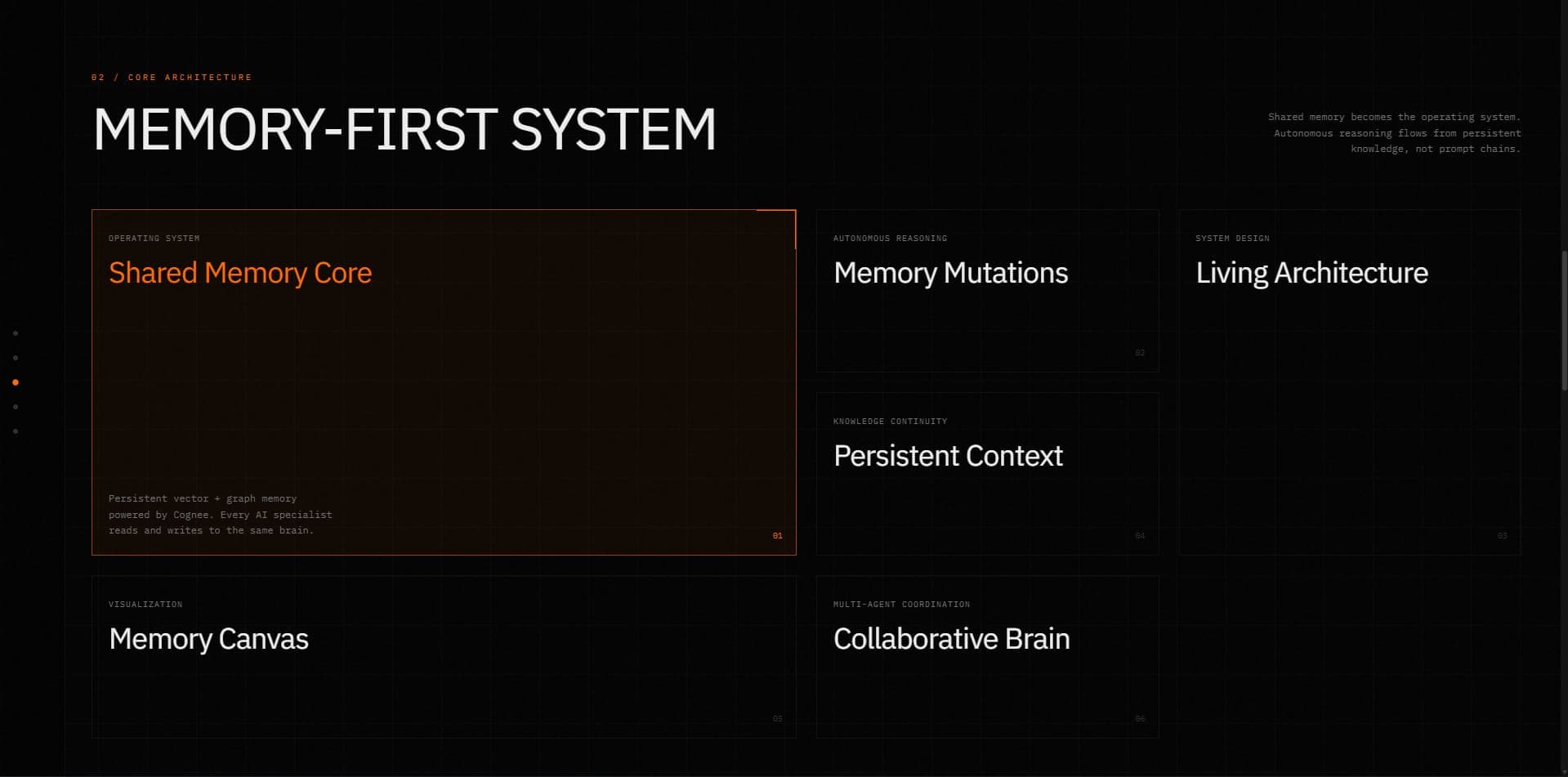
Syntapse is what happens when a product idea outgrows a chat. Specialized agents read and write one shared memory, then turn that idea into a PRD, an architecture, a stack recommendation, and an implementation strategy. Change a decision and the plans that depended on it go stale, instead of quietly staying wrong.
Problem
Passing a growing prompt from agent to agent feels like teamwork until a requirement changes. The next plan still believes the old answer. The context was never shared. It was a message someone forwarded.
Goals
- 01Carry an idea through a PRD, an architecture, a stack evaluation, and an implementation strategy.
- 02Keep that work in a memory graph, not in a prompt that has to be copied around.
- 03Let an edited decision mark the plans that depended on it as outdated.
Architecture
Next.js and React show the project as a neural canvas. FastAPI serves the agents and opens a WebSocket to the browser. Cognee and Memgraph hold the memory graph. Redis Pub/Sub carries events between agents. Supabase stores authentication, project pods, the graph, and timeline events.
Implementation
Agents write product decisions into the shared graph, and the canvas draws that graph. A module evaluation returns targeted feedback and a fix prompt, so the whole plan does not have to be rewritten. Edit a decision and the downstream plans can be marked outdated.
Tradeoffs
Shared memory instead of passed prompts
Every agent reads and writes the same project memory. That is how a requirement can change without the rest of the plan pretending it did not.
Healing a plan after an edit
Editing a decision invalidates the downstream plans that used it. Regenerating the entire plan would have been simpler, and worse.
Results
A live demo, a walkthrough video, and a technical blog are public.
Limitations
The public notes do not say how large the graph can get, or how many people can use one project at once. The repository is not public.